Thought For The Week

Barbara Poelle is one of those people you just have to like. Well, you don’t have to, but you do anyway, because she’s funny and witty and gives out good advice and is a literary agent with the Irene Goodman Literary Agency. You’ll like that last part even more if you send her a query for your masterpiece and she starts stalking you in hopes of acquiring it. Before she got into the Agent Biz, she was a freelance copywriter, and editor, and even a standup comic, which you can easily believe if you read her columns. The columns I speak of are in Writer’s Digest and are titled, “Funny You Should Ask,” and they answer all sorts of questions about writing and the publishing business. This is one place you can get all that good advice.
But wait…there’s more! Writer’s Digest gathered 10 of her columns together in a handy little bunch and sent them to me so I could find out a whole lot at once. They didn’t do it because they like me…they did it because I subscribe to their newsletter. So here’s a plug for their newsletter: it has lots of good stuff in it and you should subscribe if you want to see good stuff, like Ms. Poelle’s columns. A really good reason is that it’s free, and you can also unsubscribe if it doesn’t suit you, so it looks like you’ve got nothing to lose here.
But if you haven’t subscribed already, I’m here to lead you to all those links with an enticing little intro to whet your appetite for a little more of Ms. Poelle’s advice. So below is a sample column and a link to the bunch of other columns, and here’s a small heads-up to go with it: the Writer’s Digest link to the second column accidentally goes back to the first column, so the real link to the second column is right HERE. Feel free to bounce back and forth willy-nilly. You’re welcome.
And there’s even more! She has written a book that’s available on Amazon, and it includes over 100 of her columns, along with writing exercises, submission checklists, and who-knows-what-all-kinds-of-happy-stuff. And HERE’s a link to that so you can wangle yourself a paperback or Kindle copy, and now you have access to all kinds of Barbara Poelle stuff. What’s not to like?
Author: Barbara Poelle
Aug 30, 2021
Editor’s note: Funny You Should Ask is a rare column that just happens to appear in each issue of Writer’s Digest magazine. It’s humorous, for sure, but it’s also loaded with great writing and publishing advice from an actual literary agent. In this post, we’ve collected 10 columns written by literary agent Barbara Poelle.
Funny You Should Ask is a humorous and handy column by literary agent Barbara Poelle. In this edition, she discusses the next big fiction trend, and whether or not all books are the same.
Barbara Poelle
Jul 24, 2021
Dear FYSA,
What is going to be the next big trend in fiction?
Signed,
Pencil Poised
Dear Poised,
I am so glad you asked. I have been absolutely dying to tell someone. The next big trend is going to be … Amish steampunk crossover YA told in second person.
Right? I know! How did we not all see that one coming? It is so obvious!
OK, fine, that most likely is not the next trend, but it could be. Trends, generally speaking, are usually ignited in two specific beats on a publishing timeline: When a novel is shopped and at point of publication. The books we sell to publishers today in most cases will not see the shelves until fall 2022, so the themes, tropes, and trends you are seeing today were mostly put into motion up to two years ago when a title was initially shopped to the marketplace.
When a superbly conceived novel is sent out for consideration and creates enough enthusiasm for an auction, there can only be one winning editor. The underbidding imprints will then have a whetted appetite for something similar, and may reach out and say “Hey, I just lost an auction for an amaaaaaaazing Amish steampunk crossover YA, do you have anything similar?” And that is how you may get a bloat of steampunk YA in a future publishing season. (I have recently become obsessed with the names of groupings of animals. Like a bloat of hippopotami—could I be any more delighted with that?—and I am trying to pepper them into everyday usage. Just let me.)
When a novel is published to fanfare and the ensuing word of mouth builds enthusiasm, booksellers will be more inclined to be looking for “the same but different” from publishers in order to keep readers returning to their registers. Like when Gillian Flynn’s Gone Girl published and we soon saw a smack of domestic thrillers riding that wave. (Guess what that one is … jellyfish! A smack of jellyfish! I am barking with glee.)
However, let me be clear. I know I have said this before, but it is worth saying many times because I believe the real question being asked of me here is: What should I be writing in order to get that book deal? You should be writing a novel that pays attention to craft, technique, and detail. You should be writing a novel with fully realized characters, accessible yet nuanced imagery, and a storyline that promises the reader a journey both into the world and themselves. You should be writing the novel that your muse says is worth the time and effort and makes you sweat to make every word count. That’s the parliament you want to be counted among. (OWLS! *cackles with glee*)
Dear FYSA,
Let’s be honest. All books are the same. The only difference is in how much marketing and publicity they receive. How do you get a publisher to spend some real money on a book?
Signed,
In the Know
Dear In the Know,
I think you used the wrong homophone in your signature, because I feel like it’s more like, In the NO! Gosh mister, whoever put the beetles in your cornflakes this morning really accomplished their goal—you are gettin’ up swingin’ today, and how! (I don’t know if I used “and how” correctly but try saying that sentence out loud like a newsboy in the 1800s and you’ll find it immensely satisfying.)
I would like to start by asking that we set down the idea that “all books are the same.” That doesn’t serve anyone as an author or a reader—and I feel that you and I could find so many titles that defy that sentence.
So! Let me say—there are certain books tapped by the publisher to get the lion’s share of a marketing budget, and some that aren’t. That will be determined most often initially by the P&L generated by the publisher at point of offer. The P&L (profit and loss) will use a variety of data points to predict how the book might perform in the marketplace versus how much it will cost in labor and production and therefore give a ballpark for the advance. The marketing budget will be included in that labor and production portion. (The dollar amount for a budget is not usually shared at point of offer, or even ever, with the author and her agent, but an overview of intent will be.) This amount will certainly inflate if there were multiple competitors bidding at point of sale, and that is one way an agent can “get” publishers to spend more—having a spectacular novel that was in high demand to begin with.
BUT! I have seen, many times, books organically explode on the scene with word of mouth in-house, in early reviews, and from social media tastemakers, and that is nothing about the publisher spending money, but a clear mandate by the readers that what they have read is, ahem, original and exciting. To feel more invested in what this can look like, start paying attention to what makes you finally decide to buy a book—start to read like a consumer as well as a reader and an author—and starting turning your “no” into a “know.”
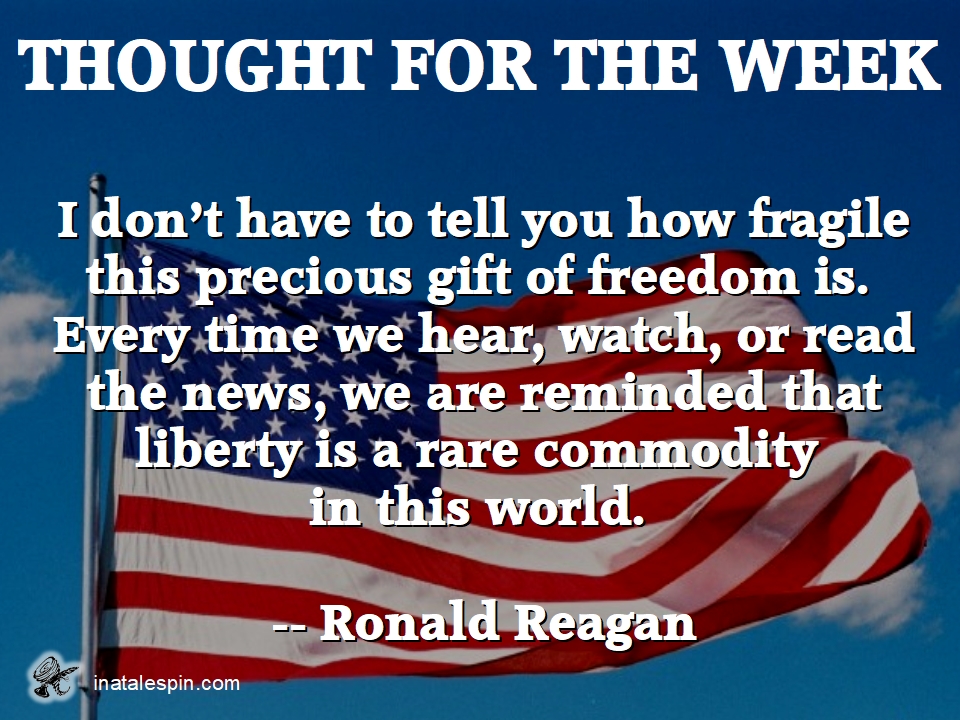
It’s Friday, September 10th, and my nephew, Tim, graduates from Marine Corps Boot Camp today. Tomorrow is the 20th anniversary of 9/11. Somehow, it’s both appalling and gratifying to think that pretty much everybody knows exactly what I’m talking about when I just mention a date.
The attacks on the Twin Towers and the Pentagon, and the attempted attack on the White House that ended in a Pennsylvania field, were so staggering in their impact, such deep wounds to our nation, and at the same time such a universal unifying force of compassion and resolve that swept around the globe and touched so many millions of souls so deeply, that a simple date evokes an avalanche of memories and emotions. It’s been doing that for 20 years…it was that powerful.
And now Tim and his companions in that training battalion are about to take up the responsibility for the defense of our country as they transition from recruits into Marines. And most of them weren’t even born when 9/11 happened. It makes my head spin a little when I think about it. I’ve been thinking about it a lot.
There’s a lot that goes into that defense of our country, and a lot of it is taken for granted. A lot of it, people just don’t know about. I worked in a then-classified mobile missile warning unit that deployed to dozens and dozens of locations right here in the United States, playing hide-and-seek with Russian spy satellites, with a mission of surviving the first wave of nuclear missile strikes…because we knew the primary missile warning sites wouldn’t survive…so that we could warn the National Command Authorities about the targets and timing of the second wave. We knew an attack could happen at any time, but we had no idea when or where or how bad, so we trained, and waited, and stayed alert, and prepared.
I also worked in a unit in South Korea that was stationed north of Seoul, in the way of a potential advance of the North Korean Army, and our mission was to train to live in the field, manage communications between rear echelon and forces engaging the enemy, and provide forward air control for air support to ground troops. We knew the North Koreans could come across the border at any time, but we had no idea when or where or how bad, so we trained, and waited, and stayed alert, and prepared.
And on that fateful day 20 years ago, I was already deployed to Kuwait for Operation Southern Watch and was stationed within mortar range of the Iraq border. By the time the second plane hit the second tower, pretty much the entire U.S. military was on high alert and bases were locked down and the search for who and how had feverishly begun. We knew that Iraq was suspected of having stockpiles of chemical weapons, and wasn’t happy with us, and just might be unleashing a retaliation at us. And we were within mortar range. So we kept our chemical defense gear close at hand, and trained, and waited, and stayed alert, and prepared.
I was fortunate. The Russians didn’t launch their nukes, the North Koreans didn’t roll across the DMZ, and Saddam Hussein wasn’t lobbing chem warfare mortars at us. The point of all this rambling is that there is an overabundance of bad people in this world who want what you have and want to take it from you. Or are jealous of you and want to take it out on you. Or who think that because you aren’t like them or don’t think like them, you should be punished or subjugated or destroyed.
A lot of those people who hate us are in Afghanistan, like Al Qaeda–the real perpetrators of 9/11–plus the Taliban, ISIS-K, and others, and we’ve just spent 20 years suppressing their aggressions against the world and ensuring a measure of freedom for the people of that region. But now we’ve left there and given the bad guys back their base of training and operations. This isn’t intended as a criticism of that action, because there is a tremendous complication behind decisions about how our forces are employed and there are other ways and places for bad guys to gather and train and plot against us, anyway. But it does encourage those bad guys and it worries me to think it happened right before the 20th anniversary of 9/11.
What’s going to happen on Saturday? Maybe nothing…that’s what we’re hoping for, of course. Maybe something huge. But no matter what, it’s hanging over the heads of our military men and women just like Russia and North Korea and Iraq were hanging over my head on those other days, years ago. And they will be training, and waiting, and staying alert, and being prepared for whatever happens.
So here’s a big salute to Tim, and his battalion, and his comrades-in-arms all around the world, because the price of liberty is eternal vigilance and they are paying that price for us. We’re all fortunate to be living in a country that values individual freedom and liberty for all, and like President Kennedy once said, “Let every nation know, whether it wishes us well or ill, that we shall pay any price, bear any burden, meet any hardship, support any friend, oppose any foe, to assure the survival and success of liberty.”
It’s a sad but true fact of life that even if you spend years pouring your heart and soul into your masterpiece of literature, it has to have a good marketing effort or it will just sit there, languishing in the shadows of your mom’s bookshelf. If you manage to land a deal with a major publishing house, they have professionals who can market the heck out of it. If you self-publish, as so very many of us end up doing, it’s all on you.
There are resources out there to help you publicize your book, but very few as far-reaching a platform as Facebook. The big problem with Facebook is that they want to make a profit more than they want to help you do your thing. So if your thing isn’t stirring up the masses and bringing in views and clicks and conversation and sharing, and therefore more revenue for them, they’re not very interested in helping you. You can buy ads, with the exposure they give you dependent on how much money you spend, but like other marketing ploys out there, there’s no guarantee you’ll sell enough to make up for what you pay. You can post your own notices that your epic tome is available and wonderful, but if you just put it out there, it can be pretty and enticing and magnificent and amazing as it can possibly be made, but nobody will see it and it will keep languishing in those shadows.
Here’s an article by Karma Bennett in the San Francisco Book Review that has some tips on how to engage some of the power of Facebook to help spread the word, and the interest, about your book. It’s a few years old and Facebook’s algorithms are ever-changing and frustrating, but this is a good picture of the way things are and some things you can do about making your posts visible and interesting and maybe even profitable for them, which translates into profitable for you. It’s a partnership, and your job is to puzzle out what your side of it can do to energize their side of it.
Good luck.
by Karma Bennett
May 10, 2018
You may have noticed that your posts on Facebook aren’t getting as much traction as they used to—epecially the important posts promoting your book. Yikes. It’s what marketing pros are calling “Facebook apocalypse.” (Sound dramatic? Welcome to marketing!) A few weeks ago I explained why this is happening; this week, I explain what you can do about it.
Before Facebook’s Russian troll problem, the company was already under criticism for promoting shallow content. A social network is supposed to be a place for friends to interact. So, when people complained they saw more posts from brands than from the people they know, Facebook took it seriously. Henceforth, comments are more important than likes or shares. In general, your posts are more likely to be seen if people are commenting on them. Facebook wants conversation, so generate that however you can.
Facebook doesn’t show your post to all your friends. Instead, Facebook shows it to a small sample, and if those people like or comment, it will show your post to more people. But you don’t know which of your followers Facebook is going to show it to or if this post will be of interest to them. That is why whenever you have something important to share, you should tag people you think will find the topic engaging.
You can tag people on Facebook by typing the “@” symbol, followed by their name, and this should make their name appear in a drop-down list; then select the names you want to add. Do this at the end of the post so that the copy of the post is most likely to get read. Also, don’t be afraid to tag people in the comments if they are not in the conversation and should be.
I like to include a message explaining why I tagged them. For example, “I’m tagging @Howard Lovecraft and @Edgar Poe because I know you love a morbid conversation.”
I understand how helpful it can be to have a plugin that autoposts your latest blog to Twitter and Facebook. But if even you never see your own post, you are breaking all three of the rules of social media. How can you expect people to engage with your post, if you yourself had no engagement with it?
The way Facebook works now, you get a preview of the title when you post a link. But, most of the time, a blog’s autopost uses the TITLE of the blog post as the content of the Facebook post. So, anyone can see that your contribution to the Facebook conversation was to simply copy the title that is already there, which might suggest this isn’t something especially important to you.
Additionally, the autopost won’t tag your friends, so you’re at the mercy of whomever Facebook randomly selects as to whether your post gets widely seen or not.
 In A Tale-Spin